Introduction
In today’s competitive market, a standard, off-the-shelf screen often fails to unlock a product’s true potential. To achieve a unique user interface, seamless integration, and specific performance characteristics, you need a tailored solution. This is where a CDTech Electronics Custom LCD Display becomes an invaluable asset. By moving beyond generic displays, you can create a product that stands out, operates flawlessly in its intended environment, and perfectly embodies your brand’s vision.
But what exactly can you customize, and how does it benefit your bottom line? This article explores seven powerful benefits of partnering with a specialized manufacturer like CDTech to create your own bespoke display solution. From optimizing for harsh outdoor conditions to creating a distinctive aesthetic, a custom approach is the key to product differentiation and market success.
1. Unmatched Design Freedom and Product Differentiation
The most obvious benefit of a CDTech Electronics Custom LCD Display is the freedom it gives your industrial designers. You are no longer constrained by the limitations of catalog parts. You have the power to dictate the exact specifications that will define your product’s user experience.
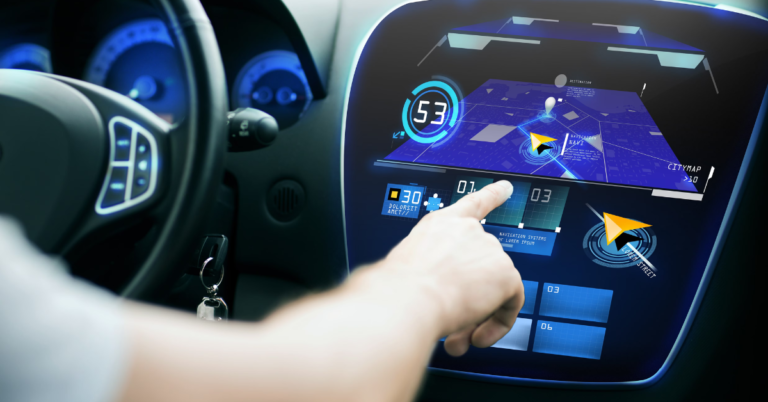
- Size and Shape: While standard displays come in set sizes, a custom display allows you to specify unique dimensions. This is particularly valuable for creating bar-type displays for automotive dashboards, digital signage, or specialized medical equipment. CDTech, for example, offers a range of bar-type TFTs in sizes like 3.9-inch, 8.8-inch, and 12.3-inch, which can be further adapted to fit your exact enclosure.
- Resolution and Aspect Ratio: Whether you need a crisp 1280×720 resolution for a rear-seat entertainment system or a specific square format for a smart home device, a custom solution ensures your content is displayed exactly as intended.
- Optical Bonding and Coatings: To enhance readability and durability, you can specify advanced features. This includes optical bonding (using OCA or LOCA) to reduce glare and improve contrast, as well as special coatings like anti-glare (AG), anti-reflective (AR), or anti-fingerprint (AF) to suit the end-use environment.
This level of customization ensures that the display is not just a component, but a seamless and integral part of your product’s overall design language.
2. Enhanced Performance for Specific Environments
A standard display might work perfectly in a climate-controlled office, but what if your product needs to function on a sun-drenched factory floor, in a freezing vehicle, or in a humid outdoor kiosk? A custom LCD is engineered to perform reliably in its specific operating environment.
- High Brightness and Sunlight Readability: For applications like marine displays, automotive dashboards, or outdoor payment terminals, screen visibility in direct sunlight is critical. By customizing the backlight unit and using optical bonding, manufacturers can achieve luminosity levels exceeding 1000 nits, ensuring the display remains perfectly readable even under bright sun. Many of CDTech’s high-brightness solutions are designed precisely for this purpose.
- Extended Temperature Ranges: Consumer-grade displays often fail in extreme temperatures. Custom industrial displays can be built with components rated for wide operating temperature ranges (e.g., -30°C to +85°C), guaranteeing reliable operation in everything from arctic conditions to scorching desert heat.
- Robustness and Durability: By customizing the cover glass with chemically strengthened materials and specifying a specific touch technology (like Projected Capacitive Touch – PCAP), you can create a display that is resistant to impact, scratches, and vandalism, making it ideal for public use.
3. Seamless System Integration
One of the most time-consuming and costly parts of product development is integrating a display with the rest of the electronic system. A custom approach simplifies this dramatically.
Instead of designing a complex interface board to connect an off-the-shelf display to your main PCB, you can have the display custom-engineered to match your system’s exact specifications. CDTech Electronics supports system-integrated solutions, including custom PCB boards and converter boards. This means the display can be delivered with the correct connector, interface (like RGB, LVDS, or MCU), and even an integrated HDMI board, making it a true “plug-and-play” component within your architecture. This level of integration reduces development time, lowers BOM costs, and minimizes the risk of signal integrity issues.
4. Optimized Touch Panel Performance
The user interface is no longer just about what’s on the screen; it’s about how the user interacts with it. A custom solution allows you to perfectly marry the display with a touch panel solution that meets your exact needs.
You have several choices to make, and a custom approach lets you get them all right:
- Touch Technology: Choose between cost-effective resistive touch (RTP) for gloved-hand operation or the superior multi-touch and optical clarity of projected capacitive touch (CTP). CDTech has its own CTP production line, ensuring quality control over the entire touch sensor process.
- Cover Glass Customization: The cover glass is the first point of contact. You can customize its thickness, shape (including 2.5D or 3D curves), and color (with silk-screened borders and logos). This is where the look and feel of your product truly comes to life.
- Optical Bonding Method: The method used to bond the touch panel to the LCD (air bonding, OCA, or LOCA) dramatically affects optical performance and durability. A custom solution lets you select the best method—like the “dead black effect” mentioned in CDTech’s case studies, which provides infinite contrast when the display is off, giving a premium, seamless look.
5. Supply Chain Control and Long-Term Availability
Perhaps one of the most overlooked benefits of a CDTech Electronics Custom LCD Display is the stability it brings to your supply chain. Standard display modules can be discontinued by their manufacturers with little notice, forcing you into costly and time-consuming product redesigns.
When you develop a custom display, you establish a direct relationship with the manufacturer. This typically involves a defined product lifecycle, ensuring the display will be available for as long as you need it—often 5-7 years or more. This is critical for industrial, medical, and automotive applications where products are expected to be in the field for a decade or longer. You gain control over your component’s future, protecting your product from unexpected obsolescence.
6. Expert Technical Support and Collaboration
Embarking on a custom design project can seem daunting, but with the right partner, it’s a collaborative journey. Choosing a manufacturer like CDTech gives you access to a team of experienced engineers who guide you from concept to production.
This support begins with the initial feasibility study. Their R&D department will evaluate your product requirements, confirm what is technically and economically feasible, and provide suggestions if your initial ideas need refinement. As noted in their FAQ, they assign a professional Project Manager (PM) to drive the project forward and a dedicated quality team to provide after-sales support. This partnership approach ensures that potential pitfalls are identified early and that the final product not only meets but exceeds your expectations.
7. Cost-Effectiveness in the Long Run
While the initial tooling cost for a custom display might be higher than buying a standard part, it is often the most cost-effective solution over the entire product lifecycle. Here’s why:
- Reduced BOM Costs: A fully integrated display, with a custom PCB and interface, can replace several discrete components, simplifying assembly and reducing the overall bill of materials.
- Lower Assembly Costs: A display that fits perfectly into your enclosure and connects directly to your main board reduces manufacturing complexity and assembly time.
- Elimination of Workarounds: You avoid the expensive “workarounds” needed to fit a standard display into your product, such as custom bezels, extra interface boards, or complex software adaptations.
- Enhanced Product Value: A superior, custom-tailored user interface can command a higher price in the market and build stronger brand loyalty, ultimately increasing your return on investment.
What is the typical lead time for a custom LCD project?
The timeline can vary based on complexity. According to CDTech, the lead time for the initial tooling order is generally around 4 weeks. The overall timeline to first articles depends on your specific requirements, such as custom ICs or unique backlight units, and material supply after the design is finalized.
What exactly can be customized on an LCD module?
Almost every aspect can be tailored to your needs. This includes the TFT LCD module itself (size, resolution, interface), the backlight (brightness, color, number of LEDs), the touch panel (technology, cover glass shape, coatings), and the associated electronics (PCB design, interface boards).
How is the tooling cost for a custom display determined?
The tooling cost is directly related to the complexity of your custom requests. Once you submit your requirements, the manufacturer’s engineering team will perform a feasibility study. If the request is feasible, they will calculate the cost based on the new tooling required for items like the custom cover glass, FPC, or backlight molds. If not, they will offer alternative suggestions to achieve your goals.
Why should I consider a custom LCD for my next project?
Choosing a custom LCD display is an investment in your product’s uniqueness and success. It ensures the display fits your design perfectly, performs flawlessly in its intended environment, integrates seamlessly with your electronics, and provides long-term supply chain stability. It’s about building a product, not just assembling parts.
About the Author