Introduction
Pediatric care in hospitals and community settings is one of the most demanding and complex forms of healthcare delivery. Children are not small adults. They have unique physiologic, emotional and developmental needs that require high levels of clinical training, empathy and communication. In a world where healthcare systems are stretched thin by staffing shortages and rising demand, virtual models of care are emerging as a powerful way to support pediatric care teams and improve outcomes for children.
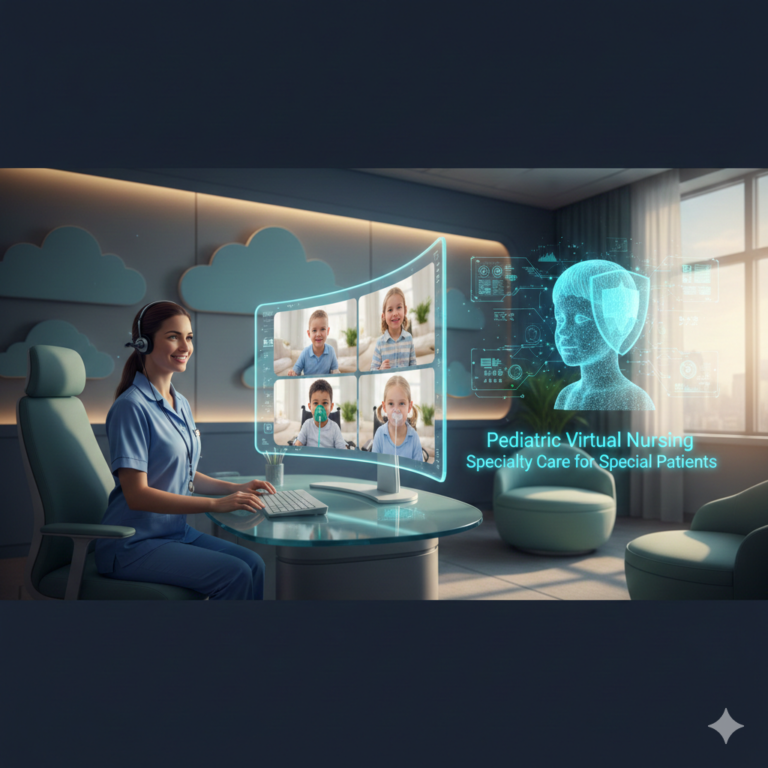
One such model that has gained momentum is pediatric virtual nursing. This approach connects expert pediatric nurses remotely to bedside teams in hospitals and clinics to provide specialty support that strengthens safety, enhances care quality and reduces unnecessary stress for families and frontline staff. Virtual nursing does not replace hands-on bedside care. Instead it extends clinical capacity and brings specialty expertise into every corner of the healthcare system.
Why Pediatric Virtual Nursing Matters
Caring for children requires specialization that goes beyond clinical skills. Pediatric nurses must understand childhood development, communicate effectively with families, and provide reassurance during stressful situations. These skills are the foundation of high quality care. Traditional care models assume that pediatric expertise is available on site. But in many community hospitals and rural settings, trained pediatric nurses are not always present. This can lead to delayed assessments, unnecessary transfers and increased burden on families.
Pediatric virtual nursing fills this gap by providing immediate remote access to nurses who are trained in the nuances of child health. These virtual nurses work closely with bedside teams to guide clinical decisions, support family communication and handle documentation and coordination tasks that can pull on-site staff away from direct care. By empowering bedside teams to focus on hands-on work with their young patients, virtual nursing enhances overall care quality and supports nursing staff wellbeing. The goal is to bring clinical precision and empathy into every interaction children and families experience.
Expertise and Team Approach
A key strength of pediatric virtual nursing is specialization. Experienced pediatric nurses who work in virtual programs often have many years of focused practice. This depth of expertise allows them to see things that others might miss, anticipate complications and coach bedside teams through complex cases. The virtual nurse acts as a clinical ally, contributing to admissions, discharges, ongoing assessments and communication with families.
In many programs, virtual pediatric nurses have conducted thousands of clinical interactions. These interactions have helped standardize care delivery and improve outcomes by making sure that clinical best practices are followed and that families feel supported and understood. Virtual nurses also support quality improvement initiatives by helping teams reach key performance benchmarks and strengthen safety protocols.
How It Works
Pediatric virtual nursing integrates technology and teamwork. When a child is admitted to a hospital or treated in a community facility, bedside nurses can connect with virtual pediatric nurses through secure video or telehealth platforms. This connection happens in real time. Virtual nurses participate in admissions and discharges, assist with clinical decision making and help manage care coordination tasks that require additional time or expertise.
The collaboration does not stop there. Virtual nurses also help with family communication, offering explanations of care plans and answering questions that caregivers often have. They can help navigate language barriers by ensuring accurate understanding of clinical information and verifying details that affect safety and treatment. By doing so, they reduce stress for families and prevent errors that can occur when communication is unclear.
Benefits for Children and Families
One of the greatest benefits of pediatric virtual nursing is improved access to specialized care. Many families live far from large pediatric centers and local hospitals may not have pediatric specialists available at all times. Virtual nursing bridges that gap. It allows children to receive expert guidance without long travel times or unnecessary transfers. This keeps care closer to home and reduces the physical and emotional burden on children and their families.
For families who speak languages other than English or who may struggle with medical terminology, virtual nurses provide clarity that improves safety and confidence. In practice, this means better understanding of medications, procedures and follow up care. When families understand what is happening and why it matters, they are better partners in care. This collaboration leads to smoother care transitions and faster recoveries.
Benefits for Hospitals and Staff
Hospitals benefit from pediatric virtual nursing in several ways. It supports scalable staffing and enhances safety metrics by making sure that experienced pediatric clinicians are involved in care decisions. This is especially important in community settings where pediatric expertise may be limited. Virtual nursing helps reduce the need for transfers to larger hospitals simply because a specialist is not available. This keeps patients where they are most comfortable and reduces strain on tertiary hospitals.
For bedside nurses, virtual support can reduce burnout by sharing workload and offering expert backup during challenging cases. This support also helps increase job satisfaction. Nurses who feel supported are more likely to stay in their positions and provide high quality care. Virtual nursing is also a resource for mentoring and professional development, as virtual nurses can coach and guide less experienced staff.
Challenges and Opportunities
Integrating virtual nursing into pediatric care does require careful planning. Healthcare systems must have the technology and infrastructure to support real time communication. Staff need training on how to partner with virtual nurses efficiently. There are also considerations around privacy and secure transmission of health information.
Despite these challenges, the potential impact is significant. Early implementations of pediatric virtual nursing have shown positive results in reducing stress for families, preventing unnecessary transfers and strengthening clinical decision making. Continued innovation in telehealth and remote monitoring technologies will expand opportunities to integrate virtual care deeper into pediatric practice in both inpatient and outpatient settings.
Real Impact Stories
There are numerous examples of how pediatric virtual nursing has made a difference. One case involved an infant who was admitted to a community hospital by a relative who did not speak English. The bedside team struggled to obtain accurate clinical history. A virtual pediatric nurse intervened, ensuring communication was clear and that essential safety information was captured correctly. This intervention improved the infant’s care and prevented potential complications.
These real life stories illustrate the power of combining clinical expertise with technology. Virtual nurses bring calm, experienced presence to high stress situations. They ensure that care decisions reflect both clinical evidence and compassionate communication.
Looking Forward
As healthcare systems continue to adopt virtual models of care, pediatric virtual nursing will play a growing role in delivering safe and effective care to children everywhere. By extending pediatric expertise beyond traditional hospital walls, virtual nursing strengthens the capacity of care teams, supports families and improves clinical outcomes.
Hospitals and health systems that invest in virtual nursing are investing in a future where high quality pediatric care is more accessible, coordinated and resilient. Pediatric virtual nursing is not a replacement for hands on care but a vital complement to it. Together virtual and bedside teams can deliver care that is both clinically excellent and deeply human.
About the Author